
One Word That Kills Your Breastmilk
- Arija Israel, M.Ed.

- Jan 30, 2019
- 3 min read
January 2, my first day back at work from maternity leave, and my husband is texting me that the baby won't take her bottle. Common? Yes. So I chalk it up to her being picky and not wanting some plastic nipple in her mouth (she doesn't like pacifiers either). After all, she was strictly breastfed for almost 3 months before being introduced to this horrible imitation of a boob. And her sister was even the same way...barely took a bottle while I was at work...so we had been here before.
"She'll take it eventually. She'll realize that's the only way she's going to eat and she'll take the bottle."
Well, weeks go by and still she refuses the bottle. She screams. She fights. She waits until I get home to nurse her. But my poor husband is losing his mind listening to her cry when the bottle is right there and she could just eat! So I search the internet for the best bottles for breastfed babies and find a $28 bottle (yes, for one bottle)! It's guaranteed to work and it better! For $28 it better warm the milk and clean itself too! We are desperate though, not only to feed our little bundle of joy but also to be able to finally go on a date, or anything without kids in tow! No one wants to watch a screaming, angry baby that doesn't take a bottle. But. That. Doesn't. Work. Either! She sucks the bottle for a few seconds and then begins to cry again. So the other day I figured I would try. She would see my face and feel my presence and be tricked into taking the bottle, right? WRONG! She sucks for a few seconds and not only forces the nipple out with her tongue but spits the milk out too! Oh no she didn't! LOL So I decide to taste it myself to see what's up and it's disgusting!!! One word immediately comes to mind...LIPASE! Why did I not think to do this weeks ago?!
Lipase is an enzyme that is normally present in human milk and...help[s] to break down fats in the milk, so that fat soluble nutrients (vitamins A & D, for example) and free fatty acids (which help to protect baby from illness) are easily available to baby (Lawrence & Lawrence, p. 156).
So lipase IS beneficial, unless there's an excess and then it can cause some problems. It doesn't actually kill your liquid gold but it can put a damper on your breast/bottle feeding experience. After the milk is pumped, the taste can begin to change sour or soapy over time due to the enzyme. This could be anywhere from within a few hours to a few days later depending on your level of lipase. Some babies don't mind the taste but clearly mine did. So now what? I have a freezer full of milk that she won't drink and still have to pump at work everyday...only for it to end up in the freezer as well??
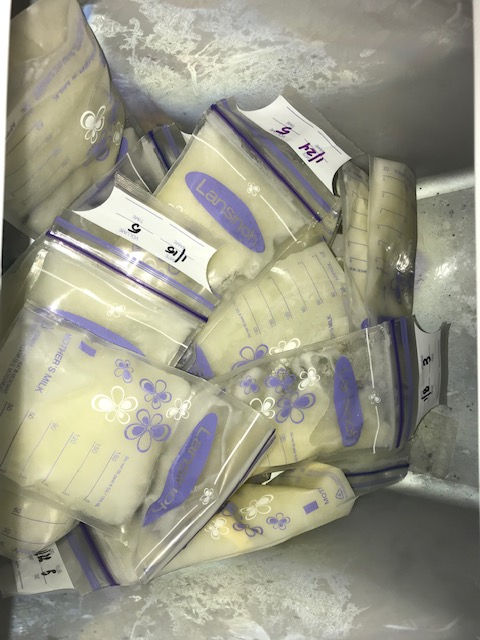
If you find yourself in the same predicament, taste your milk that baby is refusing to drink (not freshly pumped milk of course). If the taste is off, there's a few things you can do.
Try mixing the “rejected” frozen milk with fresh milk. Start with half frozen, half fresh and adjust the amount of frozen milk up or down depending on your child’s preferences. (kellymom.com)
Try scalding the milk immediately after pumping or as soon as you get home from work. Heat the milk to 180F (not boiling) using a bottle warmer or the stove and then quickly cool it (ice bath) before storing (fridge or freezer). *Note: if you choose to wait until you get home to scald and baby still refuses the milk, you might have to scald at work. Your lipase levels might be high enough to affect your milk within hours of pumping. **Second Note: The process of scalding milk does break down active enzymes, so although the nutritional content won’t change, your baby won’t be getting the same antibodies as he would from freshly expressed breastmilk or direct latch feeding. We recommend giving your baby freshly expressed breastmilk when possible.
Use the "rejected" milk for breastmilk baths and make your little one some lotion. You don't need to throw it out. The same still stands as always...NEVER pump and dump!!

So after one attempt at scalding and feeding, Micaela drank the milk! All Praises To The Most High!!
Sometimes we forget that there's often more than one solution to every problem.
And sometimes it just takes admitting that we don't know what else to do.
Now on to planning that date night...and to the post office to send that $28 bottle back!
Book Reference
Lawrence R, Lawrence R. Breastfeeding: A Guide for the Medical Profession, 6th ed. Philadelphia, Pennsylvania: Mosby, 2005: 156-158, 203-205, 771, 781.

Comments